Root Canal Treatment in Kothrud, Pune
Save Your Tooth. Relieve Your Pain.
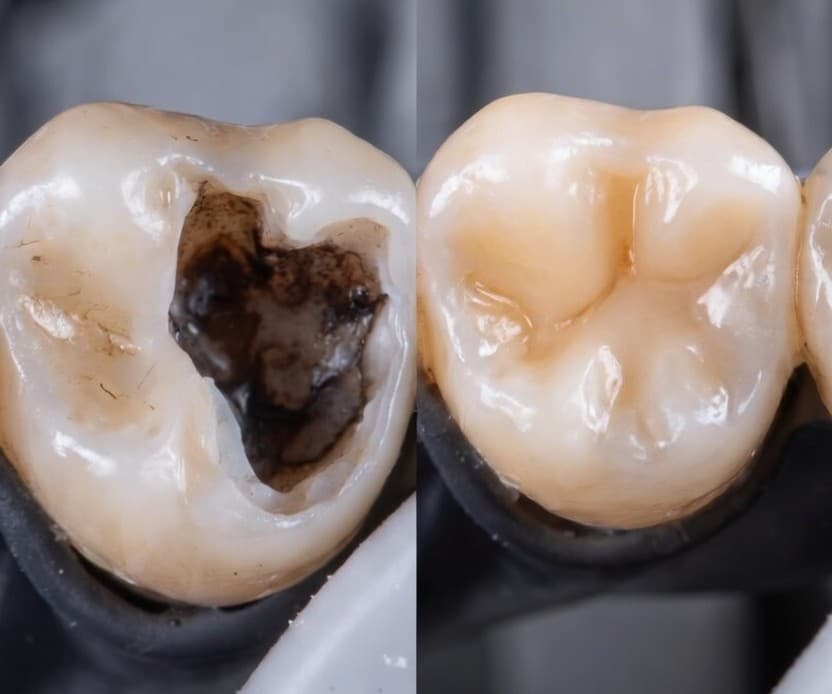
Using modern techniques and gentle care, our Root Canal Treatment removes infection, relieves pain, and preserves your natural tooth -helping you return to eating, smiling, and living comfortably.
About Root Canal Treatment in Kothrud
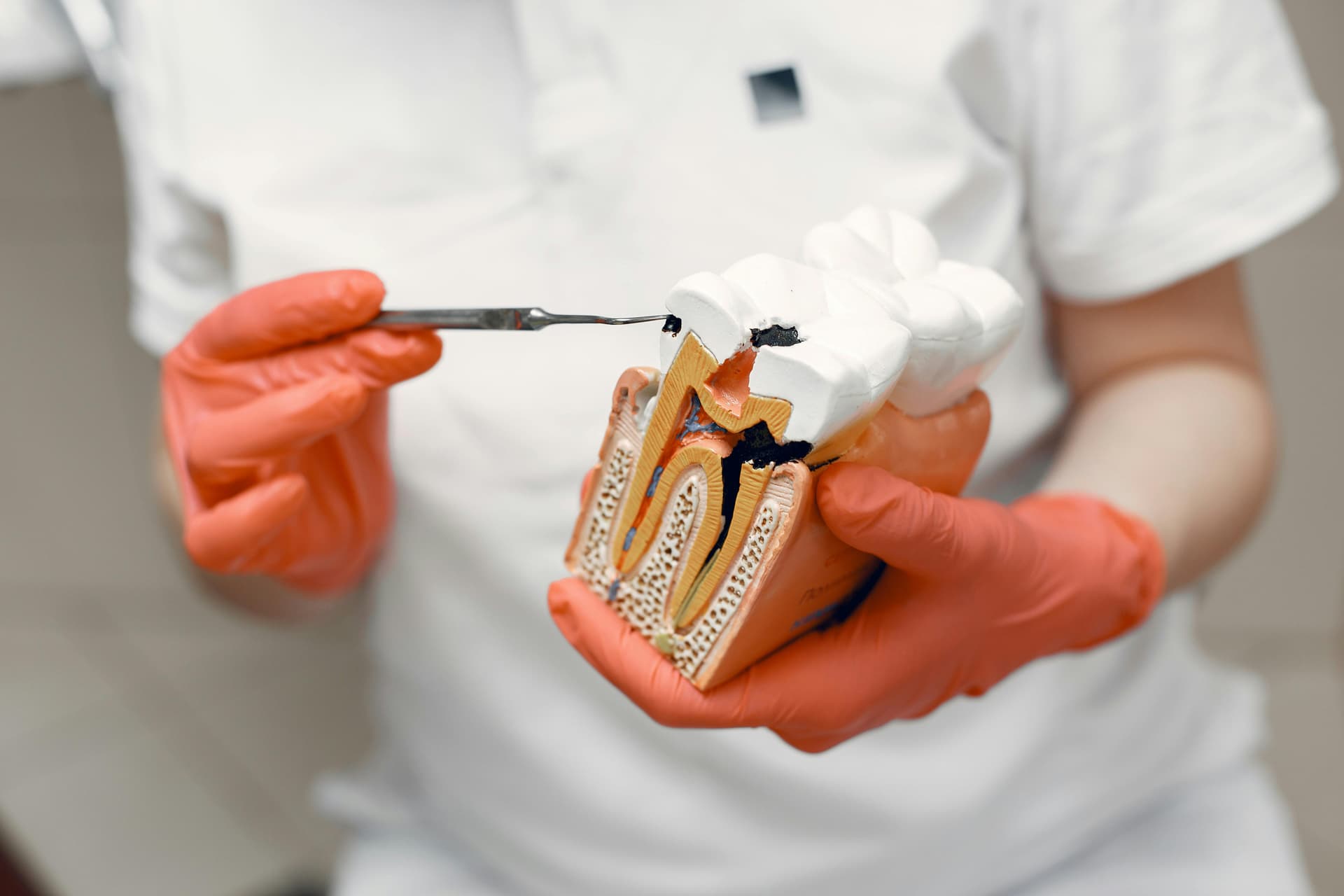
A root canal treatment (RCT) is a procedure that removes infected or inflamed pulp -the nerve and blood vessel tissue inside your tooth -to eliminate infection at its source. At Aesthedent in Kothrud, Pune, root canal treatment is handled by Dr. Aishwarya Kulkarni Wathodkar, BDS, who has advanced training in endodontics (root canal treatment), using digital X-rays and rotary endodontic techniques for precise, minimally invasive treatment.
Unlike an extraction, RCT lets you retain your natural tooth structure -which remains the gold standard in dental care, since no artificial replacement fully matches the strength and function of a natural tooth. With modern anesthesia and single-sitting protocols where clinically appropriate, the procedure is far more comfortable than most patients expect.
Ignoring the early signs of pulp infection -lingering sensitivity to hot or cold, pain while chewing, or a darkening tooth -allows the infection to spread into the surrounding bone, often leading to an abscess, worsening pain, and eventual tooth loss. Early diagnosis means a simpler, faster procedure and quicker relief. If you're experiencing tooth pain in Kothrud or the surrounding Pune area, timely evaluation at Aesthedent can help save your natural tooth before the infection advances.
Because an infected tooth is urgent and nobody wants to cross the city with one, most of these patients come from Kothrud itself and the Paud Road side. If you are in pain today, phone rather than email.
What root canal treatment does for you
- Retains your natural tooth structure, which no artificial replacement fully matches
- Eliminates the infection at its source rather than masking the pain
- Stops the infection spreading into the surrounding bone and forming an abscess
- Avoids the cost and complication of replacing a missing tooth later
- Completed in a single sitting where clinically appropriate
Why patients choose us for this treatment
Treated by a dentist with advanced endodontic training
Root canals here are handled by Dr. Aishwarya Kulkarni Wathodkar, BDS, Bharati Vidyapeeth, Pune -a general and family dentist with advanced training in endodontics.
Digital X-rays and rotary endodontics
Digital radiography confirms the diagnosis and the canal anatomy; rotary instrumentation cleans and shapes the canals more precisely and with less removal of sound tooth than hand filing.
The crown conversation happens first
A treated tooth is more brittle than a live one and back teeth usually need covering to stop them splitting. You get that figure at the start, not as a surprise at the second appointment.
Told before it happens, not after
You are numbed and tested before we begin, and each step is described as it comes. Raise a hand at any point and we stop.
What to expect, step by step
Diagnosis on a digital X-ray
We confirm which tooth is involved, how far the infection has spread, and whether a root canal is genuinely the answer -and we show you the image rather than describing it.
The plan, including the crown
How many sittings your tooth is likely to need, whether it will need a crown afterwards, both costs, and what happens if you leave it untreated.
Anaesthesia, tested before we start
Modern local anaesthesia, checked for effect before any instrument is used. If you need more, you say so and you get more.
Removing the infected pulp
The inflamed or infected pulp is removed and the canals are cleaned and shaped using rotary endodontic instrumentation.
Disinfection and sealing
The canal system is disinfected and sealed so bacteria cannot re-enter. Single-sitting where clinically appropriate; more complex molars may need a second visit.
Protection and bite review
A crown where the tooth needs one, then a check that the bite is right. A restoration a fraction too high is the usual cause of lingering soreness afterwards.
Common questions
Is a root canal painful?
The procedure relieves pain rather than causing it - what hurts is the infected nerve you arrive with. Under local anaesthetic most people say it feels similar to having a filling. Some soreness for a few days afterwards is normal and settles with ordinary painkillers.
How many appointments will I need?
One or two for most teeth, depending on how many canals it has and how much infection is present. Molars take longer than front teeth. We will tell you which after the X-ray rather than after we have started.
Can I just have the tooth out instead?
You can, and it is usually cheaper on the day. But the gap then needs managing - the teeth either side drift, and replacing it later with a bridge or implant costs more than the root canal would have. We will lay out both options honestly.
Do I really need a crown afterwards?
Often, yes. A tooth that has had its nerve removed becomes more brittle and back teeth take heavy biting forces, so they tend to need covering to stop them splitting. Front teeth sometimes do not. We will tell you which category yours falls into.
What happens if I leave it?
The infection does not resolve on its own. It typically spreads into the bone around the root, which can lead to an abscess, facial swelling and eventually losing the tooth. Treated early it is a simpler procedure with a better outcome.
What does a root canal cost in Pune?
It depends on which tooth - front teeth have fewer canals than molars - and on whether a crown is needed afterwards. You get both figures in writing after the X-ray, before anything begins.
I am dreading this. Can you do anything about that?
Tell us when you book. We schedule more time, explain each step before it happens rather than narrating it afterwards, and stop the moment you raise a hand. A lot of people here have avoided a dentist for years; nobody will comment on it.